Monday, May 7, 2012

Pelee Island to the end.....


For the love of god, NEVER, EVER, stay at the "It's Home Cabin" on Pelee Island:

http://www.pelee.com/peleeisland/its-home-cabin/


NEVER....... It's SO BAD...........  I can't even begin to describe how bad it is.. It shouldn't be possible to make a cabin as bad as it is.....


Seriously........ I stayed in a really old beat down cabin at Netitishi Point (no electricity, no water, lots of mice + garbage) - with Alan Wormington in 2010 and had a considerably better experience than this dirt bowl on Pelee Island


(Netitishi)


With that said.... We're gettin out of dodge...... Just like this Great Crested Flycatcher from today


And I'm not joking. Leaving Pelee Island tomorrow for the mainland, where we will attempt to terrorize the birders at the Point for several days....

And don't get me wrong, the birding at Pelee Island is still great... I had two of my absolute favourite birds today (Peregrine Falcon and Golden-winged Warbler) - but 2012 is not the year for us here......


Sunday, May 6, 2012

Peleee Islanddd


Ken "Tucky" Burrell hard at work at Fish Point - Pelee Island 

Still don't have a huge amount of info from Pelee Island (too tired, watching hockey)..

The last two days have had some good birds. May 5th was very birdy.. Had a nice Brewster's, 3rd Prothonotary in 3 days.... etc

Insects remain similar with rarities around, but nothing new... Strange that we were ahead of the curve vs. Pelee for most days of the warm-weather invasion, yet suddenly they get a bunch of Sleepy Orange's and we get none?


More to come.....


link


http://www.ttpbrs.ca/


Many Ontario birders have probably seen the Black-throated Gray x Townsend Warbler banded in Toronto a few days ago, but I thought I'd share on the blog just in case....

Link above, pics should be near the top..


=============

Pelee Island was good yesterday, but I'll do a two day post later!


Friday, May 4, 2012

Pelee Island - May 4, 2012


Today was probably pretty darn good in the grand scheme of things, but after the last two awesome days - it seemed slower and I think our activity level was lower as well.......

In the evening, we finally got into the cottage we rented to discover it is the dirtiest pos you could imagine (as far as beach cottages go)... But my Dad and I then found 5 Willets on the rocks just offshore, which made it better - for a while.....

Some birds: Male Prothonotary at Fish Point... 5 Willets from our "new" cottage... Lots of Tennessee's... mmm yeah I don't really remember much else.. Blue-winged Warbler, Orange-crowned... A Mockingbird at Fish Point (odd place) in a very light reverse migration.... yeah....

-----

Butterflies were as expected... Dainty Sulphurs, Little Yellows, Variegated Frits, Buckeyes, Fiery Skippers... You know, the usual's... Actually had my first Spring Azure on Pelee Island this year.

-----

Dragonflies were also on the light side, but probably due to lack of effort... my "new" species for the day was a Pondhawk...


Sleep time!!!!


Thursday, May 3, 2012

Pelee Island Birds - May 3, 2012


Personal Highlights today was 3 Golden-winged Warbs, several Blue-wings, a backcross (2nd gen) Brewster's, Cerulean, Prothonotary, FOY Wilson's among many other warblers...

Peregrine Falcon and a juv male Northern Goshawk were also awesome..

Missed a Kentucky by half a second (I saw the bird fly away, but not well enough to count) and the reported Worm-eating Warbler....


Was a very busy day in the woods, as there was a spectacular reverse migration to start it off.... Ken put some details in his ontbirds posting (copied below) about numbers... I'll supply some photos!


Blue-winged!


Dickcissel!


Prothonotary!


Golden-winged!


Ken's ontbirds posting:


Hey Birders, An awesome day here on the island! 

High temperatures last night and through today coupled with strong SW winds couldn't have been better for an excellent day of birding today! Close to a 145 species were seen on the island today, with 29 species of warblers (plus 1 hybrid) seen! A good reverse migration of close to 2,600 birds was also seen. 

 Highlights: Dickcissel - 1 male seen reversing at Fish Point AT 8:06am. Brandon (Holden) was able to photograph this bird in flight. Check his blog out - http://www.blog.peregrineprints.com/
 Kentucky Warbler - 1 bird seen briefly at Sheridan's Point 

Worm-eating Warbler - 1 bird reported at Fish Point 

Prothonotary Warbler - 1 female seen reversing, 1 male seems to be back on territory at Fish Point in the large slough 

 Golden-winged Warbler - 2 males seen at Fish Point, 1 male seen at Lighthouse Point. 1 of the birds at Fish Point was seen to reverse 

 Cerulean Warbler - 1 male at Fish Point

 'Brewster's' Warbler - 1 male backcross at Sheridan's Point 

Least Bittern - 1 bird heard at Fish Point - same bird as yesterday 

 As I mentioned above warblers were in evidence throughout the island. Good numbers of warblers were seen for most species, with first of the year being Mourning, Wilson's, and Canada. 

 With the strong SW winds, raptors were concentrating at the NE section of the island - both Pergegrine Falcon and Northern Goshawk were seen to be migrating. 

 Also mentioned above, there was a good reverse migration from Fish Point lasting from sunrise to around 9am. Close to 2,600 birds were observed with some impressive numbers being seen. Most notable are listed below: 

 Yellow Warbler - 107 
Nashville Warbler - 105 
Baltimore Oriole - 479 
Orchard Oriole - 87

 Butterflies (and dragonflies) continue to impress as well. 2 Dainty Sulphurs, and 20+ Little Yellow's were the main highlights from a vagrant perspective. 

 Here's a link of my ebird checklist from today: http://ebird.org/ebird/canada/view/checklist?subID=S10624242 

 Good Birding, Ken Burrell

Pelee Island Insects - May 3rd, 2012


Going to continue to post two messages here to keep things simple (for me)....


May 3, 2012 - Ken Burrell, my dad and myself


Butterflies:


Highlight was 2 Dainty Sulphurs... One at Fish Point in the morning, one on the south shore around 3pm

Little Yellow - At least 20 individuals. The first around noon at Fish Point, and the trend continues where they were seen regularly in several places by the evening.

American Snout: somehow we hadn't seen any Snouts until today, when they suddenly became common (50-100 individuals seen)

Giant Swallowtail - 1

Dark Swallowtail sp - 1

The "trend" continues for other species, as Common Buckeye(40+) and Variegated Frit(20+) were much more in evidence than yesterday.


Dragonflies:


Swamp Darners continued to increase - migrants

"Red Saddlebags" - 6 individuals. Only one was ID'd - a true Red Saddlebags

Spot-winged Glider - 1

Variegated Meadowhawk - 2

Painted Skimmer - 3 individuals

Black Saddlebags - only 5

Twelve-spotted Skimmer - 25+ individuals today - many appear to be migrants

1 large female Spreadwing Species


Dainty!


Super super fresh


I was excited for the first one...... Little Yellow

Wednesday, May 2, 2012

Pelee Island Birds! - May 2


Some bird highlights from today:


Bird highlights (self-finding on the island with Dad and sometimes Ken Burrell):

LeConte's Sparrow
2 Grasshopper Sparrows
5 Blue-winged Warbs
2 Orange-crowned Warbs
1 Canada Warbler (early)

Other FOY for me: Indigo Bunting, 5 Tennessee Warbs, Chestnut-Sided, Magnolia...


Great hawk movement (for an island) today as well:

2 Peregrine Falcons, 1 Merlin, 2 Kestrels, 4 BW hawks, 3-4 Osprey, 3-4 Eagles, etc etc  on the strong SW winds - along with many Swallows/Swifts etc


==============================


For filler, I did the Pelee Island report for Ken today, who was having email trouble:

===========================
Pelee Island Highlights today:

Least Bittern: Fish Point

Peregrine Falcon: 1 at Fish Point early, 1 at Lighthouse Point in the afternoon

Cerulean Warbler: Fish Point

Grasshopper Sparrow: (2) NE corner of Island

LeConte's Sparrow: NE corner of Island


22 species of Warblers were recorded on the island today. FOY included
Tennessee, Bay-breasted, Magnolia, Orange-crowned and an early Canada.
Blue-winged Warblers were in evidence with at least 12 individuals.


Strong SW winds and high tempreatures hit around noon today, which
continued the spectacular insect migration seen so far in 2012.
Butterfly species of note included Fiery Skipper, Variegated
Fritillary(5+), Common Buckeye (8+), Monarch (15+) and an unusual
"Pale Form" Question Mark. On April 30th an estimated 5000-7000 Red
Admirals per hour were migrating north along the west shore of the
island (no counts attempted today).

Today was the first day of notable Dragonfly sightings with numerous
Swamp Darners, Variegated Meadowhawk, Painted Skimmer, Black
Saddlebags and a Twelve-spotted Skimmer.


Good Birding!


Brandon Holden

www.PeregrinePrints.com


Pelee Island insects May 2nd - CRAZY CRAZY CRAZY


The insect migration continues to boggle the mind........  Crazy thing is that we are focusing on birds, and seeing all of these things while birding


Butterflies:


Variegated Fritillary - at least 5 individuals

Common Buckeye - at least 8 individuals

Fiery Skipper - 1 individual (Fish Point)

"Pale Form" Question Mark - 1 (lighthouse pt) - I have no idea what to make of this?

Monarch - several fresh individuals (15+)

Eastern Tiger Swallowtail - 1 (Ken), Dark Swallowtail sp 1 - (Ken)

Pearl/Early? Crescent - 1

Mourning Cloak (Dozens)


Dragonflies: --- FINALLY some good odes!!!!!!


Painted Skimmer - 1 (Lighthouse pt)

Black Saddlebags 1 (Lighthouse pt)

Variegated Meadowhawk - 1 female (Lighthouse Pt).

Twelve-spotted Skimmer 1 (Lighthouse)

Swamp Darner - 30+ Individuals near Lighthouse Pt

Common Green Darner 40+


Pale Question Mark ?? I don't know what to make of this one... 


Tuesday, May 1, 2012

Pelee Island: May 1


Pelee Island May 1st! Tired edition:


Butterflies were a major highlight (major) over the last two days. Yesterday, Red Admirals were flying north along the west beach of the island at a conservative rate of 5000-7000 per hour.... INSANE...

Mourning Cloaks seemed to arrive in numbers as well? Seemed strange. Ken had a Monarch today, and today there was numerous Painted Ladies, which were my FOY after having nothing but American Ladies for days before this... The really strange thing was that Painted Ladies were suddenly more common than American Ladies today......

ID only - Painted Lady


Quality - Painted Lady


BIRDS:

Here's the full ebird list - was a very entertaining day.. Lots of Yellow-rumps, Palms, Yellows, White-crowns and White-throats:

Canada Goose X
Wood Duck X
Mallard X
Blue-winged Teal 4
Bufflehead 20
Red-breasted Merganser X
Ring-necked Pheasant X
Wild Turkey X
Double-crested Cormorant X
Great Blue Heron X
Great Egret X
Green Heron 1
Turkey Vulture X
Bald Eagle 3
American Kestrel 1
Killdeer X
Spotted Sandpiper X
Solitary Sandpiper X
Ring-billed Gull X
Herring Gull X
Great Black-backed Gull X
Caspian Tern X
Mourning Dove X
Ruby-throated Hummingbird 2
Red-headed Woodpecker 3
Red-bellied Woodpecker X
Downy Woodpecker X
Northern Flicker X
Least Flycatcher 4
Great Crested Flycatcher 1
Eastern Kingbird 4
White-eyed Vireo 1
Blue-headed Vireo 2
Warbling Vireo 8
Red-eyed Vireo 4
Blue Jay X
American Crow X
Horned Lark X
Northern Rough-winged Swallow X
Purple Martin X
Tree Swallow X
Bank Swallow X
Barn Swallow X
Cliff Swallow X
Black-capped Chickadee 10
Carolina Wren 1
House Wren X
Blue-gray Gnatcatcher X
Ruby-crowned Kinglet X
Veery 1
Hermit Thrush X
Wood Thrush 1
American Robin X
Gray Catbird 4
European Starling X
Northern Waterthrush 2
Blue-winged Warbler 2
Black-and-white Warbler 4
Nashville Warbler 10
Common Yellowthroat 3
American Redstart 1
Blackburnian Warbler 2
Yellow Warbler X
Palm Warbler X
Pine Warbler 3
Yellow-rumped Warbler X
Black-throated Green Warbler 4
Eastern Towhee X
Chipping Sparrow X
Clay-coloured Sparrow 2
Field Sparrow X
Savannah Sparrow X
Song Sparrow X
Lincoln's Sparrow 4
Swamp Sparrow X
White-throated Sparrow X
White-crowned Sparrow X
Dark-eyed Junco 1
Northern Cardinal X
Rose-breasted Grosbeak 1
Bobolink 2
Red-winged Blackbird X
Rusty Blackbird X
Common Grackle X
Brown-headed Cowbird X
Orchard Oriole 2
Baltimore Oriole 1
House Finch X
American Goldfinch X
House Sparrow X


Kingbird ate SOOO many butterflies it couldn't close its mouth.......

We've joked about keeping a "birds that ate the butterflies" list - already several species... 


Pelee Island Apr 30th!!


Turns out I may have some weak internet.......  My Dad and I flew to Pelee Island around 10am, so we missed the "slower" part of the day with good gulls and willets, but arrived to bird with Ken and see the spectacular reverse migration...

There really isn't anything comparable to seeing flocks of 50+ Warblers leaving out over the lake together.....


Here's Ken's Ontbirds post to flesh out the day details. (Time for sleep for me):


Hey Birders, What a difference a day can make! 

Today started out pretty slow. Around 8am showers came through and lasted until 10:30am, afterwards activity was very high, with a very intense reverse migration taking place, lasting until 1:30pm. A rough guess of numbers of birds is around 3,100 birds (this is the 3rd highest reverse I've had in the past 3 springs). 

 Highlights: Willet - 1 bird present at the Fish Point Lesser Black-backed Gull - 1 first-winter bird at Fish Point  

Reverse migration: as I said it was a pretty awesome migration, most being warblers (2,800 birds). By far the most abundant bird were Yellow-rumped Warblers with 1,609 being seen! Other interesting birds seen included; 55 Palm Warblers, and Unidentified Warblers 1,250 (likely 95% Yellow-rump's). 

 Quite a number of birds were found for the first time this year; American Redstart, Cape May, Blackburnian, Black-throated Blue Warbler, Wood Thrush, Veery, Baltimore Oriole, Indigo Bunting, Scarlet Tanager etc.

 This week should be really good! http://kenburrell.blogspot.ca/2012/04/p-p-p-pelee-3.html 

 Good Birding, Ken Burrell

Sunday, April 29, 2012

A look at Vagrant Traps along the Great Lakes

I really like rare birds, especially finding them. So it's no surprise that I'm also hooked on the locations that repeatedly turn them up.

I've gone through some of the known vagrant traps along the Great Lakes (biased towards Ontario) and pulled out some specific examples to discuss:


          Birder concentration/ human influence:          

Duluth, MN:

red lines - a long "run" for birds until they hit Duluth (large catch-area)


Sample: Glaucous-winged Gull, Snowy Plover, Vermillion Flycatcher, Black-headed Grosbeak, Burrowing Owl, Fork-tailed Flycatcher

The skinny: Duluth is a heavily populated and birded area right at the end of Lake Superior. With a long run of shoreline to catch (or trap) birds, it has turned up an impressive list. Populated areas also attract a variety of birds due to man-made influcenecs like landfills (Glaucous-winged Gull), parks to concentrate bird migrants/vagrants and even things like sewage lagoons.

Chicago Waterfront, IL:

Red X - development helps concentrate birds at remaining habitat on waterfront. 


Sample: Ross's Gull, "Olympic" Gull, Grace's Warbler, Large-billed Tern, Black-tailed Gull, Brewer's Sparrow, Reddish Egret, Rock Wren, Vermillion Fly, Groove-billed Ani

The Skinny: similar to Duluth, the Chicago waterfront boasts an impressive list of mega's. Many rarities are found because they're attracted to humans (Gulls) or have been super-concentrated in the few remaining natural areas along the lakeshore, and are easier to find (Grace's Warb). It also doesn't help that the number of birders in the area is also very high.


          Points:          

Point Pelee

Red: points funnel birds to a concentration point (tip) and attract birds flying in off the water

Sample: Black Swift, Mottled Duck, Neotropic Cormorant, Lesser Nighthawk, Gray Flycatcher, Plumbeous Vireo, Cassin's Finch

The Skinny: Point Pelee is world famous for its birds, and is a mecca for rarities. Thousands of observers go over this location with a fine toothed comb and have turned up an impressive list (mainly in spring). Being located at the very bottom of the Great Lakes, the "catch area" for this location is much larger than the map suggests.

Whitefish Point:


Sample: Inca Dove, Short-tailed Hawk, Virginia's Warbler, Lucy's Warbler, Least Tern, Brewer's Sparrow, McCown's Longspur

The Skinny: Whitefish is another point with a huge catch area. Prevailing SW winds blow directly down to the tip of the point, which has probably helped turn up some of these real CMF's. It also has a huge run to catch vagrant waterbirds passing the point (or coming ashore).

          Islands:          

Manitou Island, MI:


Sample: Say's Phoebe, Scissor-tailed Flycatcher, Snowy Egret, Smith's Longspur, Black Vulture

The Skinny: Islands are a haven for birds who find themselves out over water, and don't want to be there. I can only assume that Islands are great for rarities, because rarities are likely very lost to begin with and maybe end up out over water more frequently than our local birds. Manitou has a huge draw area from the waters of Superior, and probably also benefits from being at the end of a major peninsula. Part of the problem with Islands, is they're much harder for birders to get to - which is the case here.


Pelee Island

(Green lines for Pelee Island). 

Sample: Western Wood-Pewee, Wood Stork, Garganey, Crested Caracara, Burrowing Owl, White Ibis

The Skinny: being surrounded by water is one thing, but Pelee Island also benefits from having small (natural) points on 4 corners. Point Pelee and Pelee Island seem to share a unique relationship as being a bit of a "bridge" for passerines to cross during their nocturnal migration. This is often visible on nexrad radar, and being right smack in the middle of the bridge could have added to this impressive list of birds.


          Natural Habitat          


Presqu'ile PP

far left

Sample: Lesser Sand-Plover, Sulphur-bellied Flycatcher, Sandwitch Tern, American Oystercatcher, Snowy Plover, Wilson's Plover

The skinny: part of the "wild card" aspect to vagrant hotspots is habitat. On the above map, Presqu'ile doesn't really stand out compared to the plethora of points and bays of Prince Edward County. Yet there is a story here that maps don't show - habitat! Presqu'ile is blessed with great habitat for waterbirds, shorebirds and has lush woods for landbirds. Prince Edward County is a Red Cedar/Juniper savannah wasteland sort of habitat (the circle), with hard rocky shorelines and limited beaches. Presqu'ile has enough of a geographic impact on the lake to allow it's spectacular habitats attract a very impressive list of birds .

(At the same time, the "question mark" on the map is Prince Edward Point Bird Observatory, which still gets an impressive list of rarities in its own right).


Thunder Cape:


Sample: Brewer's Sparrow, Violet-Green Swallow, Sulphur-bellied Flycatcher, Virginia's Warbler, Sprague's Pipit, Yellow-billed Loon

The skinny: This one is obviously a point, but I think also has the right habitat... I've heard that high elevation areas attract birds (heard this in Bermuda), and Sleeping Giant itself is pretty big. Then there is a nice low level area right at the tip for them to settle down into.


Accessibility:


Wolfe Island:


Sample: Yellow-nosed Albatross, Razorbill, Great Cormorant, Tufted Duck, Eurasian collared Dove, Northern Wheatear, Vermillion Flycatcher

The skinny: Wolfe Island is a large Island in Lake Ontario, known for concentrations of raptors and waterfowl. A short ferry ride from Kingston (free), which runs almost every hour of the day, makes getting here very easy. Once you're there, you can drive hundreds of km's of roads to dramatically increase the area you can search.

Caribou Island:


Clark's Nutcracker, Smith's Longspur, possible Barid's Sparrow & Black-headed Grosbeak

The skinny: only 3 birders have ever been here, yet some impressive records exist. It is fairly obvious that this location would be a mecca for rare birds. But there is a massive problem - it is very hard to get to. As noted above, it doesn't even appear on most maps! Once you're there, all searching is done on foot. Not that it's a terrible thing, but sometimes can really help keep you motivated with a change of scenery.


The winner: 


Long Point


Sample:   Black-capped Petrel, Band-rumped Storm-Petrel, White Ibis, Wood Stork, Smew, Prairie Falcon, Snowy Plover, American Oystercatcher, Ross's Gull, Sandwich Tern, White-winged Tern, Thick-billed Murre, Common Ground-Dove, Boreal Owl, Black Swift, Western Wood-Pewee, Black-capped Vireo, Carolina Chickadee, Fieldfare, Varied Bunting, Great-tailed Grackle (2), Hooded Oriole (2), Gray-crowned Rosy-Finch, Cassin's Finch

A look in detail at each of the categories listed above:

Human influence: Is a big part of the history for Long Point - the "point" itself has been protected for a looong time, which is a good thing. At the same time, the mainland has enough human influence to also make it appealing to birders. Access to various locations has allowed a number of good birds to be found, not to mention deliberately man made areas (see: Smew at the fish hatchery).


Point:  No denying this point, sticking out close to 30km into the lake. It funnels birds, and rarities, to the end, such as their Black Swift.

Island: Now here's where you need to bear with me, but I feel that Long Point also draws on the "island effect". Check the black marks/arrows I added to the map. As far as mega-rare passerines are concerned (like the Black-capped Vireo or Varied Bunting), returning to the "mainland" from the tip or Breakwater isn't all that easy --- there is huge expanses of marsh that they probably do NOT want to cross. It really isolates them... It's the best of both worlds, since "point attraction" birds like a Swallow-tailed Kite, don't mind crossing over the marsh.

Natural Habitat: You can't deny Long Point has the right habitat. There is so much, that huge amounts go unchecked on a yearly basis. Just imagine what has been out there! But the entire construct, of the "island and point" effect, along with ample marsh, woodland, beach, shorebird habitat, etc etc make Long Point get an A+ here.

Accessibility:  Thankfully due to the banding operations and research, a number of CMF's have been found at places that are really hard for birders to visit (eg,/ the TIP... ) It is partially really unfortunate that it is like this, but what can you do ? I wrote this piece and awarded Long Point the "best vagrant spot" award.. Not the "best chance for you to get there and find vagrants" award!

Saturday, April 28, 2012


Forecast map for May the 3... Suddenly the May 1-4th looks crazy... Specifically the 2nd and the 3rd...  We're still 4-5 days away, so in another day or two we should have a really good idea of how this front will pan out... 

But as of right now, it's looking like one of those weather events (given the time of year) that you should start "getting sick" now for... Tell your boss you have surgery for that inoperable brain tumour on Wednesday, but you should be all healed up 2-3 days later... 


Oh the glory that awaits


=======================


A little ID fun if you're bored, the last bug I posted on here got an instant reply from Michael Butler and Don Sutherland (thanks guys), so I figured it wouldn't help to try again. A co-worker photographed this beast in central Ontario recently, and I guessed it was a Sphinx Moth caterpillar? But I'm not sure on that, and even still, if it was, I wouldn't know the species... So here it is! Any takers?


=======================

Slowly puttering my way to Pelee today... Figured I should give myself a few days of zen-like preparation before the first mega-wave of the season... Will hopefully be able to post some updates here!


Friday, April 27, 2012

Nature Photography 104: Part 11: You did what?


I'm just waiting for the weather to change... Don't feel like writing too much more weather jumble or predictions until it happens! Going down to Pelee for Sunday I think...


To make a very long story short, I keep finding myself annoyed with nature photography. I was very worked up a few days ago, when I became quite confident that the winner of a fairly large photo contest must have edited/doctored the photo... I then look at said persons website, and found some very blatant editing along with large amounts of shameless self-promotion as a truly expert photographer. 

This really wasn't anything new, but I learned something from it: People can do whatever the heck they want, and I shouldn't care about it. If it bothers me, I can just focus on how I conduct myself and my photography! And with that said, I had the idea to reveal some of the work done on my own photos on my personal website. 

Are you ready for a look at everything you may or may not already know about nature photography? I'll post the website version first, followed by the totally un-edited original.


____________________________________________


Part 11: You did what?

A much lighter side to NP104,


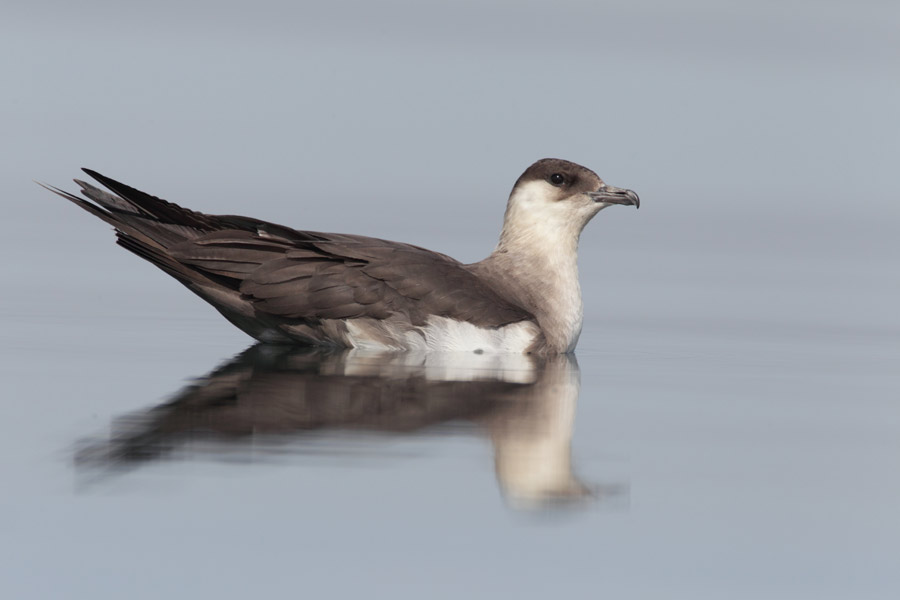
A post more for the methods than the images... Specifically, one of my favourite methods of gaining photos --- going out in the Zodiac to look for Jaegers... I think many readers of the blog are aware of this, but just in case, here's the skinny:

My Dad and I have a ~12ft inflatable zodiac, that we assemble and disassemble down at Van Wagner's Beach.. When weather conditions are safe (or safe enough), we head out into the open waters of Lake Ontario in search of pelagics. It's one of the few instances where I really feel like the photography I'm doing is pretty unique, and the results are somewhat different than other photographers. 


The prime subject matter that we're after is Jaegers, and there has been two ways that we go about finding them. Method #1 involves going out on days that are as calm as glass, and hours are spent driving around the deep (upwards of 25km offshore at times) in hopes that we stumble upon some birds. The above images of an adult Parasitic Jaeger were taken with this method... The birds are few and far between, but they provide a rare chance to get the birds in a relaxed state. 


(on a side note, I made a documentary video last fall about the "search" method described above) 


Pomarine Jaeger

Method #2 is a bit different, where we go out maybe 2-4km from shore during an east wind... This these times, the conditions are a bit more "iffy".. In short, driving into the waves (onshore for an east wind) is the difficult part... So we are somewhat safe in having a difficult time getting "away" from shore + an easy return... The waves are only a problem launching and returning the boat from shore (where they break)... A few times a boat member has got a good soaking before we even get offshore........... 


Long-tailed Jaeger vs. Great Black-backed Gull

Once offshore, we start unloading bread to attract a "feeding frenzy"... Since the east winds are blowing, the pelagics/jaegers are "within range" to be attracted to the gulls and come in close for investigation. Thanks to some well placed bread sources, we've sometimes left shore with several garbage bags full (to the point where the boat is filled with bread, and we're sitting on it).. Which keep us occupied for hours on end. 


Documentation photo by Bob Stamp of the zodiac + 2 Long-tailed Jaegers... 


Adult Long-tailed Jaeger

The "feeding frenzy" method has been wildly successful at times, with individual Jaegers (often Long-tailed) that will spend prolonged periods at extremely close range... Still room for improvement on many images, and will for sure be back out again this year. 

Hope you enjoyed a "lighter" edition on methods with lots of images!


Wednesday, April 25, 2012

Nature Photography 104: Part 10: Which way is up?


To make a very long story short, I keep finding myself annoyed with nature photography. I was very worked up a few days ago, when I became quite confident that the winner of a fairly large photo contest must have edited/doctored the photo... I then look at said persons website, and found some very blatant editing along with large amounts of shameless self-promotion as a truly expert photographer. 

This really wasn't anything new, but I learned something from it: People can do whatever the heck they want, and I shouldn't care about it. If it bothers me, I can just focus on how I conduct myself and my photography! And with that said, I had the idea to reveal some of the work done on my own photos on my personal website. 

Are you ready for a look at everything you may or may not already know about nature photography? I'll post the website version first, followed by the totally un-edited original.


____________________________________________


Part 10: Which way is up?

This is not a common theme in my photography, but could think of two images where this happened and figured it could male for a decent installment.

The short story of the first image: I was photographing two Oystercatchers at Fort de Soto in Flordia. Earlier, I had noticed that an uber-colourful beach umbrella made for some crazy background colours (when I had been photographing a Skimmer)... But now I was knee deep in a saltwater lagoon, waiting for the Oystercatchers to come wandering down the shoreline. I knew the umbrella was there, but the birds were too close to squeeze everything into the frame. In a last second decision, I decided to simply photograph the colour (which appeared in the reflection in the water.

Before I took the shot, I thought about rotating my camera upside down, in order to make it look as if the bird was facing up right... Then I realized that this inconvenience of having my camera upside down would make it more difficult to take the shot... So I decided to shoot first, and rotate the image later. Something I was quite happy doing. Here's the result:


It seems to make the world of difference (to me personally) to have made the decision pre-shooting to rotate the image. The end result was what I had envisioned all along, whereas my next example wasn't "figured out" until the next day when I was looking at the pic on my computer. 

I took this image back when I was first getting interested in photography... Just a preening Trumpeter Swan from LaSalle in Burlington. The un-planned rotation seems to make a world of difference (to me) 


You can see some of the colour correction I've done here as well. (Brightening + cooling the temperatures to be less yellow)... Shade/shadow = yellow...  *** edit, I just noticed that these two actually aren't the same picture, but taken a second or two apart from each other, so you still get the idea*** 


Just for fun, here's an extra image (web and original) from each of these species pages, that have had very little work done to them:


A little digital shotgun on the Mallard... + fixed the slight underexposure (made it brighter). 


Not too much at all.. Some photographers would be pretty keen to remove the shells in front, but I liked them.  Till next time!