Sunday, June 10, 2012

Everglades National Park - Flamingo


Letter on map: J


I travelled my way down to Flamingo, which is a good haul from the park entrance. It had been devastated a year or two previously by a major hurricane, and most buildings and locations were still damaged during my visit in March 2009.  This caused 2 problems... 1 --- I travelled deep into the park with minimal supplies. 2 --- I was HOOKED and wanted to stay longer!

For the first time in my FL travels, the naturalist in my started to go crazy. I had tried to devote my time to bird photography only, but now I couldn’t help but notice all the cool plants, dragonflies, butterflies, etc etc... At the marina in Flamingo I saw TWO American Crocodiles basking in the open. Hooked I tell you! Breeding colonies of Roseate Spoolbill and Wood Stork didn’t provide many pictures, but were spectacular to see .

I did some photography at some various pools of water, but I guess it wasn’t quite the same as the “guidebooks” said after the area had been flooded with salt-water during the hurricane (+mud and dead vegetation). I did get some of my better chances with Black-necked Stilts. Osprey and Red-shouldered Hawks were also very cooperative, yet I tried to ignore them, since they were species also found back home in Ontario.


After some fun exploring Flamingo, I had a game-changing experience. Swallow-tailed Kite migration was in FULL swing, and I was seeing them everywhere. Years later, it still PAINS me to recall, but I missed one of the BEST photographs of my life when I failed to lock focus on a kite that did a top-side dive towards me, grabbed a small lizard from a tree, and proceeded to eat it while flying over my head. The missed photo would have been award winning, and the photos I DID get still make me sad....


After 2+ days in the everglades, I was itching to move again (really itching, as I managed to get chigger bites all over my feet and was extremely un-comfortable. I missed an entire night’s sleep).

It was a spectacular visit, and I’m sure I will return someday.

Friday, June 8, 2012

Everglades National Park - Anhingia Trail


Everglades National Park - Anhingia Trail 

Letter on map: I


A major stop during my Florida Trip was Everglades NP. World famous, and I had to do it.  I had just nailed my target species (Reddish Egret) at my last stop, so it was time to finally hit some habitats other than saltwater lagoons.

My target location is the famous Anhingia Trail, not too far inside the park entrance. It is known for being a short but extremely productive trail that is loaded with ultra-tame “wildlife”. The hardest part is trying to figure out where the “good” photo opportunities are, since birds are littered everywhere (Black Vultures and Cormorants are like pets).

I really enjoyed the change of species, since (I think) it was all fresh water here. Purple Gallinules, Green Herons, Wood Storks, Little Blue/Great Blue Herons, Black Vultures and the expected Anhingia’s kept me quite busy. I even saw my first Short-tailed Hawk soaring overhead, although I didn’t get much in the way of photos.  Lots of gators too!

This is a “must” location for photographers to visit, even if only for a short while. I felt somewhat uncomfortable by the large crowds, but was happy with the pics I got. After spending 1 morning there, I decided to travel futher into the park. Here’s some shots from the ANHI trail:


Wednesday, June 6, 2012

St. Augustine Alligator Farm - Florida


Map letter: B 

St. Augustine, Florida...

A quick run-down of my St. Augustine visit. I initially wrote a summary soon after I got home, but it has been lost to the interwebs, so now I will try to remember everything.

The skinny:
My location of choice was the St. Augustine Alligator farm. These Alligator farms are tourist attractions, where they stuff 500 gators into a tiny area, consider it a “breeding area” and add a bunch of touristy junk (other exotic animals, signs, displays etc) and charge you an arm and a leg to get inside.

The highlight for nature photographers is the attraction factor for wild (yes, wild) birds. They arrive at the gator-centre in full force to breed! Breeding above the gators is prime protection from land-based nest predators. The nesters are herons, egrets, ibis, storks etc.

Prime time seems to be in April and March to maximise your photography success, and I arrived in late February. Being quite far north in Florida, this meant that a handful of Great Egrets and Wood Storks had begun the nesting process, but very little else.

I worked away at the Wood Storks (which had been a life bird for me), and was happy to get some breeding behaviours captured, but decided to spend only a single afternoon before continuing on my journey.

Some images from the St. Augustine gator farm:


Sunday, June 3, 2012

oh devils


Not going to write too much about the hockey games of late... For good reason... I can only assume that both Kovalchuck and Parise are hurt, because they're practically invisible... And I'm not just saying that as a devils fan who is disappointed in the two losses, Parise is 100% clutch - all the time (except now)... He scored the typing goal for the USA (late in the 3rd ) against Canada at the last olympics.. He's easily one of the very best players in the game (and overall, I'd say he's better than any kings forward)... And never mind Kovy, the best sniper in the game - who just can't seem to shoot the puck...

At the very least, I can be happy watching Brodeur make one stellar save after another - considering he won't be around for too many more years...


Game 3 is tomorrow (Monday) night........................


========================


I'll be out of internet land for at least the next 10 days, so there won't be much in the way of updates... I don't think I've caught up on my May emails yet, so things aren't looking great on that front for June either...


Anyways, Go devils! We need game 3 gents....


Friday, June 1, 2012

SURVIVE!!!!


I can't believe how slow time goes when you're stupidly busy. I feel like I've waited 6 weeks for a single game of Stanley Cup hockey....


============================


Today's weather was a lovely low pressure system that intensified right over top of us. I wonder if anyone went to Van Wagner's Beach for a while to look for Arctic Terns and Jaegers? I know I didn't.. You know why? Cause I was working!


Time in and time out, low pressure = rare birds.... And no wonder... From this morning (Friday) ---- most of the air in eastern USA and Canada (not shown, wink) is blowing directly into Point Pelee (and into Long Point a few hours later)..... 


From this evening (Friday)... I guess we'll have to wait and see what our various "big year" birders are going to turn up...  History has shown me that 1 out of 2 "awesome looking" weather patterns bring a bunch of good birds......... 

=======================


As much as I enjoy a good low pressure system, I have very high hopes that our little butterfly (and caterpillar) friends can survive the chilly wet weather... I have very high hopes that we'll start seeing the new generation of Red Admirals (and other brushfoots) start emerging soon in dramatic fashion..


I saw a bunch of these guys the other day while working.... Anyone know their caterpillars? 


Wednesday, May 30, 2012

Go Devils


Humidity = rare butterflies


I was somewhat shocked (ok very shocked) to see a Pipevine Swallowtail in northern Lambton county today (working with Kathryn Walpole)

Then I got home and checked the butterfly group for the first time in several days, and noticed the "interesting weather" i noted a few days ago brought another wave of butterflies into the province (highlighted by mega numbers of Pipevines!)


Each of the major flights so far this year haven't just been on the hot days, its the HUMID hot days...


record from today..


Devils play soon! Lets go Devils! 


Monday, May 28, 2012

Some actually interesting weather


I'm taking a bit of a break from a busy work schedule... It's kinda fun that McDonalds all have wifi now!


===========

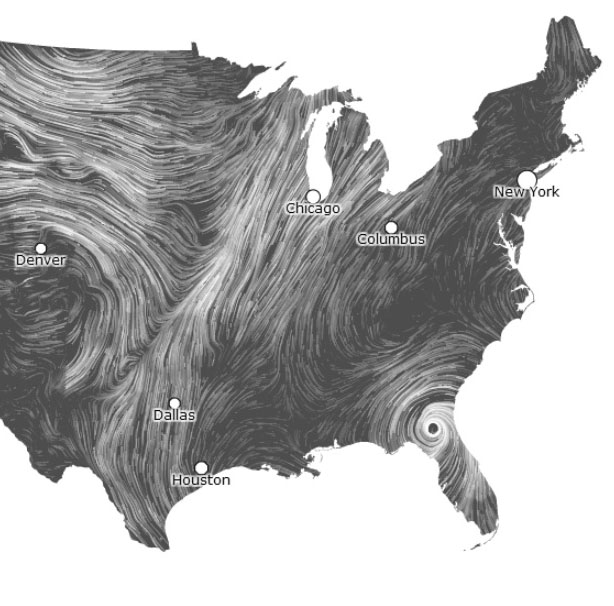
Today's weather is probably some of the more interesting in the last 6 weeks. We finally have some longer-distance south winds to go along with the heat... It isn't great, but it sure is better than what we had in the peak May period...


There's a look at the SW winds coming from the southern end of the US midwest into SW Ontario... The further the winds "come from" - the better...... 

Temps of 33-35 C with humidity nearing 40 C sounds pretty interesting... Could be good for butterflies as well... But it also makes you wonder -- is anyone still looking??? I know I'm not... I'm burnt out for the spring season, and just waiting for the NHL playoffs to resume (go devils) 


=============


After looking at the wind map I posted above, you're probably asking - what the heck is that in Florida? 

Well that is tropical storm Beryl, (yes, the second named storm of the year in the Atlantic).. Impressive, since the season doesn't officially start until June 1 (and often nothing happens until August). 


Beryl started life as a sub-tropical system, but eventually went full-out tropical before making landfall in Florida... Low wind shear allowed it to form up rather nice, but the water isn't too warm in that prat of the world, so she wasn't going to make it to hurricane strength. 


Saturday, May 26, 2012

Go Devils


Game 1 of the Stanley Cup Final goes down this Wednesday (May 30th)


Thursday, May 24, 2012

The OBRC


Here's a comment left by Fred on a recent blog posting (about some potential "new" species for the provincial list) that were hard to ID... It was good enough that I thought it deserved its own post:


=====

Do you mean it's never been seen in Ontario or
it's never been described to a record committee?

Because whatever I see or hear is my reality,
and I would not bother having it voted on by
people who I have seen make mistakes at Pelee.
(Not you personally).

And birds do pop their heads out the leaves at
Pelee for 10 seconds and are never seen again. 

=====


I was going to reply in the comment section, but I thought I would do an entire post!

In direct reply - I can say that the article was based solely on the flawed process of the OBRC review. There is one thing to be said about "experts" - if you think you don't make mistakes when identifying birds, then well, you're mistaken. 

With that said, it really is the best option we have to document these things. There is nothing wrong (at all) with  taking the approach that "I bird for myself, and I don't care what other people think" --- but at the same time, it doesn't help anyone else either.  I can speak from personal experience that reading past OBRC reports (especially older copies from the 80's - before I was born) were of extreme interest to me, and allowed me to expand my knowledge of birds/birding/vagrants in Ontario far beyond what I would be able to know without them. I think this resource is more valuable (especially to the younger/starting birders) than most people give it credit for, since these records would start to fade away over time without the reports. 


There seems to be a fair bit of negativity regarding records committees at times, and I understand it completely. I (personally) think the best way for the OBRC to move forward and be more accepted is to openly admit that the process is flawed to a degree, that mistakes are made, good birds are voted down, bad records are accepted, etc and that the only way to improve it is to be comfortable with the "flawed process" idea..

In short, we should all try to have short term memory loss when something happens we don't approve of - deal with it - and move on. Deciding to "no longer submit" because person X said something you didn't like is very likely going to hinder someone down the road (who has no knowledge of your current "beef"). 


=======================


I was going to hold this off for a while, but I figure it can't hurt to do it multiple times. 

As chair of the 2012 voting year, I can say that this fall we are going to have an OBRC policy meeting! There will be a huge list of things to discuss. As a sample: 

-- What do we do with potential hybrid OBRC rarities (like plegadis ibis hybrids) 

-- the duties of the chair, the secretary, and potential duties to be added for voting members

-- deciding on if we need a policy to re-review records (accepted and rejected) by past years) 


Which all sounds great... But a MAJOR focus is going to be how to make the OBRC more friendly to the general birding population.. And no, I don't mean updating the online report form... I mean things like:

--- How do we get people contributing "again" - after giving up on the process years ago? 

--- How do we make the process of "rejecting" a record better for the person who submits it? (I can speak from personal experience that it !&%#*$& sucks to read the comments on a personal record that has been rejected). 

--- how do we make the OBRC voting process more open to the public? 
(as some examples)


=======================

Hopefully there will be a post about this in the future on Ontbirds --- but a GREAT way for the OBRC to become more user-friendly will be to hear DIRECTLY from birders in Ontario

PLEASE feel free to leave a comment, or email me directly (peregrine13@gmail.com) to let the OBRC know exactly how you feel about the job we've been doing (negative responses may help more than positive ones!) 

All responses that I get will be printed and circulated at the policy meeting. Heck, even if you just want to rant about something that has happened in the past, please send it!


Wednesday, May 23, 2012

RED ALERT


New Jersey Devils win game 5 of the eastern conference finals against the New York Rangers! Jumping out to an early 3-0 lead, the Devils decided to confuse and frustrate fans for the next 30+ minutes, allowing the Rangers to climb back and tie it at 3-3 early in the third.

With only 10 minutes left in regulation, the devils returned to form and started reminding the Rangers why they're the favoured squad. The NJD's upstart fourth line finally got the rubber back in the NYR goal thanks to a quick one-timer by Ryan Carter with 4 minutes left to play.

Captain Zach Parise put one in the empty net, allowing NJD fans to breathe once again as they take a commanding 3-2 series lead back to New Jersey for Friday night.


Go devils 


Sunday, May 20, 2012

Top 10: New species for Ontario, that are hard to identify:

Just a bit of fun. Not a lot of explanation here, you'll have to do the research on your own... Thought it would be a fun time to post, given my recent fun with the "Solitary Vireo" stuff:


10. Pacific Golden Plover – Records for Newfoundland (3), Quebec, New Jersey etc. This is a really difficult species to tell from American Golden Plover. The hardest thing in finding this species in Ontario will be getting good enough looks (or documentation), to note the ID features.

9. Yellow-legged Gull – gulls are tough to ID, but easier once you learn the features. Adults are much easier for this species (from Nov-Feb only). 

Yellow-legged Gull


8. Allen’s Hummingbird –  several hummingbirds would be new for the provincial list, but this one needs an in-the-hand ID, so it makes the "hard to ID" list.

7. Red-naped Sapsucker –  I don’t really like species like this..  Split from “Yellow-belled”, would be very difficult to confirm in Ontario. A hybrid was found at Long Point (Mike Burrell (et al?)) in 2010.  

6. Hammond’s Flycatcher –  “overdue”, but these empidonax are tough to deal with! Its sister species (Dusky) was caught in a mist net for the first and only record. New york had one or two recenty

5. “Western" Flycatcher –  Two species here – if and when it shows up in the fall, it will get the “western” label since they’re virtually the same on looks alone. (Pacific slope and Cordilliean)

4. Cassin’s Vireo –  similar to the sapsuckers,  a “virtually impossible to confirm” sister species to Blue-headed. They probably aren't even a species ;) 


Cassin's Vireo proof- Pelee


3. Clark’s Grebe-  One of these rare “Western Grebes” reported in Ontario will one day be the sister-species: Clark’s Grebe. Watch for that brighter yellow bill!

2. MacGillivary’s Warbler – hard to find, adults much easier to ID than any possible fall records. Mourning Warbler’s with thin eye arcs are out there to confuse you. 

1. Glaucous-winged Gull – hybrids make this ID tough, some ages would be easier than others – but not too hard. My vote for “most overdue” species for Ontario as well.


Friday, May 18, 2012

Birds so close, birds so far: Part 5 (Manitoba)

A look at provincial and state bird checklists, and the species they have that we (Ontario) don't!

Past states/provinces are archived somewhere on this page:

http://peregrineprints.com/ind__Articles.htm


=======================================


While Manitoba is massive, with lots of great birding to be had --- it may not be a huge shocker that the population of just over 1.2 million hasn't turned up a pile of species Ontario's 13.3 million hasn't...

As it turns out, I found 6 species that we could add ourselves. They are:

Clark's Grebe
Glaucous-winged Gull
Broad-tailed Hummingbird
Western Scrub-Jay
Pinyon Jay
Curve-billed Thrasher


Some of these would really be CMF's if they turned up in Ontario. Having these Manitoba records puts them on the radar, but damn - it would be nice to find one of these:

Broad-tailed Hummingbird, Western Scrub-Jay, Pinyon Jay...

Two are on my "top 10 for Ontario" list (eg,// some of our most overdue species) --- Clark's Grebe and Curve-billed Thrasher


(from wiki)


And the last one, Glaucous-winged Gull, is (in my opinion), the most freakin overdue bird for the Province. I'm always dumbfounded that we haven't managed to find and document one yet. Heck, I EXPECT to find it someday, considering my crazy obsession with gulls... So where is it!??!

Thursday, May 17, 2012

Vireo info from the Vireo Guy!


Risking it all by leaving Pelee today, with no birding plans until May 22 at the earliest.... Seriously dangerous idea considering the warm weather in the forecast - but I'm not totally impressed with the winds... And besides, I plan on being intoxicated to the point that I forget I've ever looked at birds in the first place...... 


========================================

Onto the vireo!

========================================


The more I learn about these vireos, the more I like them :) So much so, that I've started a "Solitary Vireo" gallery on my picasa ID pages --- and this won't be the last bird you see added there :)


I haven't added the 2006 bird yet, but I'll get around to it eventually.... 

Got some comments from Matt Heindel, who is widely considered the go-to guy for Solitary Vireo questions, which were awesome from start to finish... I asked permission to put them on the blog, and got the green light --- so I hope you enjoy them as much as I did!


Hi Brandon- no bother at all.


This identification just keeps getting harder and I am not sure what subspecies your bird belongs to. Let me discuss some general topics first and then specifics to your bird and why I can't call it a vagrant.


First, this taxonomy is a mess as the powers that be split this into three species without consideration of certain taxa and we know that CAVI and BHVI interbreed in AB, which means we'll have offspring that are tweeners and impossible to correctly assign. A problem rarely discussed is alticola, the Appalachian race, which has much less color than solitarius, and matches your bird fairly well, but I have no clue as to the extralimital records of that taxon. Now, even though I disagree with the AOU did, we have to deal with what we have, which means putting this into one of the slots. The adult males are more slaty, lacking the intensity of blue and green, with diminished yellow; and females and ims are more gray, lacking blue tones, not as green, and with reduced yellow.


A poorly understood tidbit in this complex is the variation in plumage from adult males at the bold end, to im females at the other. This difference is at its maximum in spring, when SY birds are faded. So, some of the items you point out, while good for CAVI, are also indicative of an SY bird. Wing bars are worn, yellow is diminished, etc. So, when comparing it with any adult BHVI (incl female), the adult will look bold and beautiful.


To your bird:
I can see why it got your attention, as it is dull and relatively colorless. No blue tones, no bright green, and little yellow. All features consistent with CAVI. The tough part is determining if it is "extreme" enough to eliminate duller solitarius or alticola, and I can't get there. The lack of head-back contrast is reduced as the age-sex continuum goes to im female, and the same can be said for depth of blue and green, extent of yellow, etc. Wing bars on the bold end are thick and yellow, but on a worn bird, they can be thin and whitish.
You correctly point to the contrast at the malar, but this is a bit of a tweener. While the contrast is marginal at the lower rear border, it is fairly good half way towards the bill and I note how this feature looks better and worse in different photos. The center of throat is snowy white and this runs down towards the bottom of the throat and CAVI AVERAGES more dingy here.

To challenge myself, I approach each potential vagrant claim by reversing the situation, which in this case means, if this were reported from CA as a BHVI, would I accept it? I don't think so. It is on the dull end, and a decent part of the malar has good contrast, snowy throat, etc, but given the interbreeding and mixed offspring, I would feel better saving vagrant BHVI for ones that fit more comfortably in the BHVI bell curve. Your bird fits in the middle of the Solitary Vireo bell curve, meaning it is in between the two bell curves. But, it also could be alticola (SY female probably) and I suspect no one can tell you the likelihood that taxon getting to your area.

So, not only do I wish I could give you what you are looking for, I wish I could more confidently put a name on it. I live in TX, so see plenty of BHVI and if I saw this I would spend a lot of time on it, but I would likely leave it as uncertain, and lean BHVI. Hope that helps, although I suspect it might just muddy things up!
Best regards, matt


Matt Heindel
Fair Oaks Ranch, TX


Got a second comment from him a few days later: 


Brandon
Sure, feel free to use anything, and you might want to clip this in there, too. 

I checked two resources regarding alticola: Peterjohn does not mention it in his Ohio book. Phillips, in his Known Birds book, has some interesting comments about how some breeding BHVI in New York and PA, look like alticola, although that ssp is not known to breed north or east of West Virginia. at any rate, I still don't know the likelihood of an extralimital record of alticola in ONT, but it does deserve consideration. Their back is typically suffused with gray, so lacks contrast and is generally less colorful. Oh joy- as if solitarius from cassinii was not complicated enough! mh

Matt Heindel
Fair Oaks Ranch, TX


Tuesday, May 15, 2012

Pelee May 14/15

Boy, sure doesn't seem like May 14/15.........

A bit of a late night post, but I felt like throwing something up...

Highlights from May 14:   Lesser Black-backed Gull, Little Gull (both tip). - Rough-legged Hawk (VC lot)... Clay-coloured Sparrow


May 15: Juniper Hairstreak, a different Rough-legged Hawk (VC lot), Lesser Black-backed Gull (wheatley), and some real photography of Swallows (Bank + a Purple Martin) that I was excited about

And that's all she wrote!


Juniper!


A fun photo of Peter Burke getting some shots of the Juniper... I've always been very fond of Hairstreaks (all species) - partially because they're superb subjects for photos! 

============================

As of 10:30pm --- the migration on radar looks better than it has for DAYS and DAYS... And the forecast for tomorrow (16th) looks damn fun... I have very high hopes of some good passerine birding in the morning, followed by an afternoon of vagrant hawkwatching.......  We're overdue...... 


Monday, May 14, 2012

please, send birds...


Pelee has been slow. There, I said it... It's been slow enough that we quickly run out of birding ideas by mid day.... It's been slow enough that I've tried to convince the blond girl at the front desk to go out together and look for butterflies (to decidedly lackluster results)... Heck, it's slow enough that I'm studying the "Solitary Vireo" Complex........... !

===========


I've actually gone through 1500 photos labeled "Blue-headed Vireo" on flickr... I figure that there must be enough people out there with digital cameras to document a wide range of plumages and variations to see if a pattern of these truly pale individuals in the east exists...

Despite what you may think, I'm trying to be really un-biased, but there is very very little in the way of abnormally pale BHVI's to be found on there... Here are the highlights:


THEEE Highlight bird from Ohio: (May 28th!!) --- limited tertial edging/wing bars, but still fairly colourful - not unlike the bird we had at Pelee in May 2006

http://www.flickr.com/photos/revs45/5769239282/
http://www.flickr.com/photos/revs45/5769914995/
http://www.flickr.com/photos/revs45/5769239288/


Texas: worn-ish bird, but has lots of colour:

http://www.flickr.com/photos/56519883@N05/5755391237/

Then there's a fun one:

Blue-headed Vireo in California? Looks like it may be a Cassin's (and a lot more like our recent bird):

http://www.flickr.com/photos/roncyger/7184325228/in/photostream/


------------------------

Honestly, in 1500 photos... there's VERY little in the way of abnormally pale birds....  The above photos were the most dramatic by far...


I did some more Cassins' photo searching as well.. Some of these may be the same as yesterdays links, but I'm too tired to compare:

It seems like a lot of them have these really ugly wing bars.. I wonder why? :

http://www.flickr.com/photos/jckendall/5961323172/

http://www.flickr.com/photos/terryandchristine/745060664/

http://www.flickr.com/photos/luis_villablanca/5694941223/

http://www.flickr.com/photos/boblewis/502856199/

http://www.flickr.com/photos/gregslyon/4647362719/

http://www.flickr.com/photos/leehoy/5795517132/


A lot of them also have the healthy wingbar/tertial marks -

http://www.flickr.com/photos/53425647@N02/4960474013/

http://www.flickr.com/photos/14935921@N00/2465899266/

http://www.flickr.com/photos/christian_nunes/2525268126/

umm - blue-headed?

http://www.flickr.com/photos/smithbtr/5437312502/


------


There's only a few minutes left in the hockey game, and my devils are losing, so maybe that's enough for one night! Migration currently looks poor on radar as well.. What can you do?


=============

11pm edit: my devils lost :(

Here's some Plumbeous Vireo pics from flickr:

http://www.flickr.com/photos/41916016@N07/3885385734/
(yikes!!!)

http://www.flickr.com/photos/jroldenettel/2878113758/

http://www.flickr.com/photos/sloalan/5759502987/

http://www.flickr.com/photos/sloalan/5002343968/


Sunday, May 13, 2012

Oops - Solitary Vireo's strike back


Point Pelee, May 13, 2012 --- A "Solitary" Vireo that my Dad (Eric Holden) and I had just a ways north of the Sparrow Field near the tip of Point Pelee.

Here's the pics: (everything I got of the beast)


Not a lot of throat contrast in my opinion... 


Hard to see, but in most of these photos you can see how weak the upper wingbar is.. 


Very limited yellow colouration on the underside


I really wish this one was in focus... 


Very poor contrast between the head and the back


The bird was first seen in a Red Cedar/Juniper and was responding to some light pishing by an unknown observer (actually not me!)...  I heard them say they had a Blue-headed Vireo, when I was pretty surprised to look at the bird and see a very un-contrasting back with VERY LIMITED white/pale edging to the tertials... The bird shuffled a bit, and I was able to see that it also had very thin wing bars...

After an experience with this bird at Point Pelee in 2006 (found by Dan Salisbury): http://www.flickr.com/photos/bhbirds/5772863317/

I was more prepared than one might expect to try and ID a bird like this. I knew that the overall paleness and limited contrast, combined with the thin wing bars and limited white edging on the tertials was a dangerous combination to not see on a "Solitary Vireo"... 

Right away I went for my camera, and was able to get the photos you see above --- when the bird made a serious flight overhead and far/deep into the woods on the east side of the road --- and we didn't see the bird again. (We took a break, then returned just over an hour later and still didn't see it) --- Although Barb Charlton and David Bell were able to get some views of the bird in roughly the same area during our lapse in searching. 


=============


And for some added fun, here's three photos of a Blue-headed Vireo taken at virtually the same place, just over two hours later.. 

The fun part, is they have the EXACT same post-processing done as the above images, with the same camera, contrast, saturation etc. etc. etc.


=========================

Will post any updates/edits below, this line... But for now (8:30pm) I'll publish what I've finished above!

Brandon

--


Some Cassin's Vireo photos I've found interesting: 

http://www.ventanaws.org/conservation_bsol_update/2009/april09.4.htm - a bird with the "fresh" wing bars, but similar reduced colour below... 


http://www.pbase.com/image/62350993 -- more colour that todays bird? 

http://www.flickr.com/photos/boblewis/502856199/ -- taken in May, like todays bird - with the worn/ugly tiny wing bars... 

http://www.surfbirds.com/media/gallery_photos/20090701035458.jpg -- june with similar colour/wing bars.. 


http://www.zuropak.com/photogallery/cassin's-vireo/slides/Cassins-Vireo-30.html -- I guess they can look just like Blue-headed Vireos too???